India’s digital transformation is moving at full speed — but so are the cybercriminals targeting it. As enterprises shift workloads to the cloud, expand e-commerce operations, and digitize customer data, the attack surface keeps growing. This is why cyber threat intelligence services in India have shifted from a “nice to have” to a board-level priority for CISOs, IT leaders, and business owners across BFSI, healthcare, retail, and manufacturing.
In this guide, we’ll break down what cyber threat intelligence actually means, why Indian businesses need it now more than ever, and how to choose the right partner.
What Is Cyber Threat Intelligence?
Cyber threat intelligence (CTI) is the practice of collecting, analyzing, and contextualizing data about potential and active threats — including malware campaigns, phishing infrastructure, leaked credentials, and the behavior of known threat actors. The goal is simple: give security teams the visibility they need to detect and stop attacks before they cause damage, rather than cleaning up after a breach.
Unlike traditional security tools that focus on perimeter defense, CTI looks outward — across the open web, social media, dark web forums, and underground marketplaces — to spot early warning signs that something is targeting your organization.
Why Indian Businesses Are Prioritizing Threat Intelligence
A few trends are pushing CTI adoption sharply upward across India:
- A surge in ransomware and phishing attacks against Indian enterprises, including critical infrastructure and financial institutions.
- Regulatory pressure from frameworks like the DPDP Act, RBI cybersecurity directives, and SEBI guidelines, which increasingly demand continuous risk monitoring rather than one-time audits.
- Growing dark web exposure, with employee credentials, customer PII, and internal documents regularly surfacing in breach dumps and underground marketplaces.
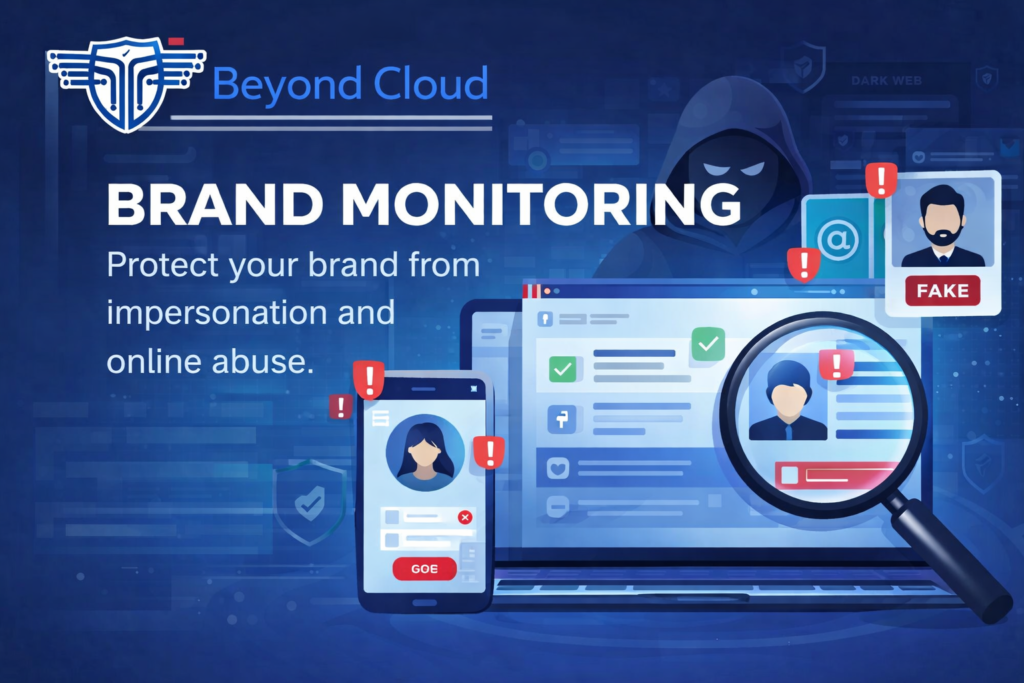
- Brand impersonation at scale, including fake websites, fraudulent social media pages, and rogue mobile apps that exploit customer trust.
- Expanding third-party and vendor risk, especially in supply-chain-heavy sectors like manufacturing, logistics, and IT services.
- Talent shortages, with many internal security teams stretched too thin to monitor threats 24/7 without outside support.
Core Components of a Strong CTI Service
Not all threat intelligence providers offer the same depth of coverage. When evaluating cyber threat intelligence services in India, look for these core capabilities:
1. Dark Web Monitoring
Continuous surveillance of forums, Telegram channels, paste sites, and underground marketplaces to detect leaked credentials, stolen data, and chatter specifically targeting your organization.
2. Attack Surface Management
Ongoing discovery and mapping of your external digital footprint — including shadow IT, exposed services, and misconfigurations — so vulnerabilities are flagged before attackers find them.
3. Brand Intelligence & Protection
Detection of phishing domains, lookalike URLs, fake social profiles, and unauthorized use of your brand assets across the web and app stores.
4. Executive Monitoring
Protection for leadership teams against doxxing, credential leaks, impersonation, and targeted social engineering — a growing risk as executives become high-value targets.
5. Supply Chain & Third-Party Risk Monitoring
Continuous assessment of vendor security posture, so a breach at a partner company doesn’t become a breach in your own systems.
6. SLA-Driven Rapid Takedown
Fast, guaranteed-response removal of phishing pages, scam sites, and rogue apps — minimizing the window of exposure for customers and employees.
7. AI-Verified, Analyst-Qualified Alerts
The best platforms combine AI triage with human analyst review, cutting through noise so security teams act on real threats instead of chasing false positives.
How to Choose the Right CTI Partner in India
With more providers entering the market, here’s what to evaluate before signing on:
- Source coverage — How many sources (surface web, dark web, social platforms) are actively monitored?
- Response times — What’s the guaranteed SLA for takedowns and alert triage?
- False-positive rate — Does the provider use AI plus human verification, or just automated scanning?
- Framework alignment — Are alerts mapped to MITRE ATT&CK or similar standards your team already uses?
- Integration support — Can findings flow directly into your SIEM, SOAR, or ITSM tools without manual work?
- Analyst access — Is there 24/7 human support for incident response guidance, not just a dashboard?
Asking these questions upfront helps separate genuine threat intelligence partners from vendors offering little more than a generic alerting tool.
Final Thoughts
Cyber threats targeting Indian businesses are growing in volume, speed, and sophistication — and a reactive security posture simply can’t keep pace anymore. Investing in dependable cyber threat intelligence services in India allows organizations to detect risks earlier, protect their brand and leadership, stay compliant with evolving regulations, and reduce pressure on already-stretched internal teams.
In cybersecurity, timing is everything. The right intelligence, delivered at the right moment, is often what separates a contained incident from a costly, headline-making breach.